Soggy Yard and Slow Drains After a Tallahassee Downpour? What a High Water Table Does to Your Septic
How often should a septic tank be pumped in Florida?
The EPA recommends pumping every three to five years and inspecting at least every three years. A large household or slow drains signal the shorter end of that range. A professional can set a schedule fitting your tank and use.
What is the first sign of a failing septic system?
Usually it's drains slowing throughout the house at once, often with gurgling toilets. Those indoor clues typically appear before anything shows in the yard, giving you the best shot at a simple repair if caught early.
Why is the grass greener over my drain field?
Lush, fast-growing grass following drain field lines usually means extra moisture and nutrients are reaching the surface instead of absorbing underground. It's a common early sign worth checking before it becomes standing water.
Can heavy rain cause my septic system to back up?
Yes. Drain fields rely on unsaturated soil to absorb water. During storm season, saturated ground leaves nowhere for effluent to go, so a system running fine most of the year can back up during heavy rain.
Do tree roots really damage septic lines?
They can. Mature live oaks send roots toward steady moisture sources like septic lines, which can clog or crack over time, causing recurring backups. A camera inspection shows whether roots are the culprit.
How do I know if it is my septic tank or just a clogged drain?
A single slow fixture is usually local. Several drains slowing together, gurgling toilets, or outdoor odors and wet spots point toward the main line, tank, or drain field. An inspection reveals the real source.
Frequently Asked Questions
Quick Answer: A drain field treats wastewater by letting it trickle down through several feet of unsaturated soil. When a heavy rain pushes the water table up close to the surface, that dry soil buffer disappears, and effluent has nowhere left to go. Slow drains, gurgling toilets, and standing water over the field in the day or two after a downpour are the tell-tale signs. The fix in the moment is to cut back on water use and give the ground time to drain; if it happens after every storm, the system needs a professional look rather than another wait-and-see.
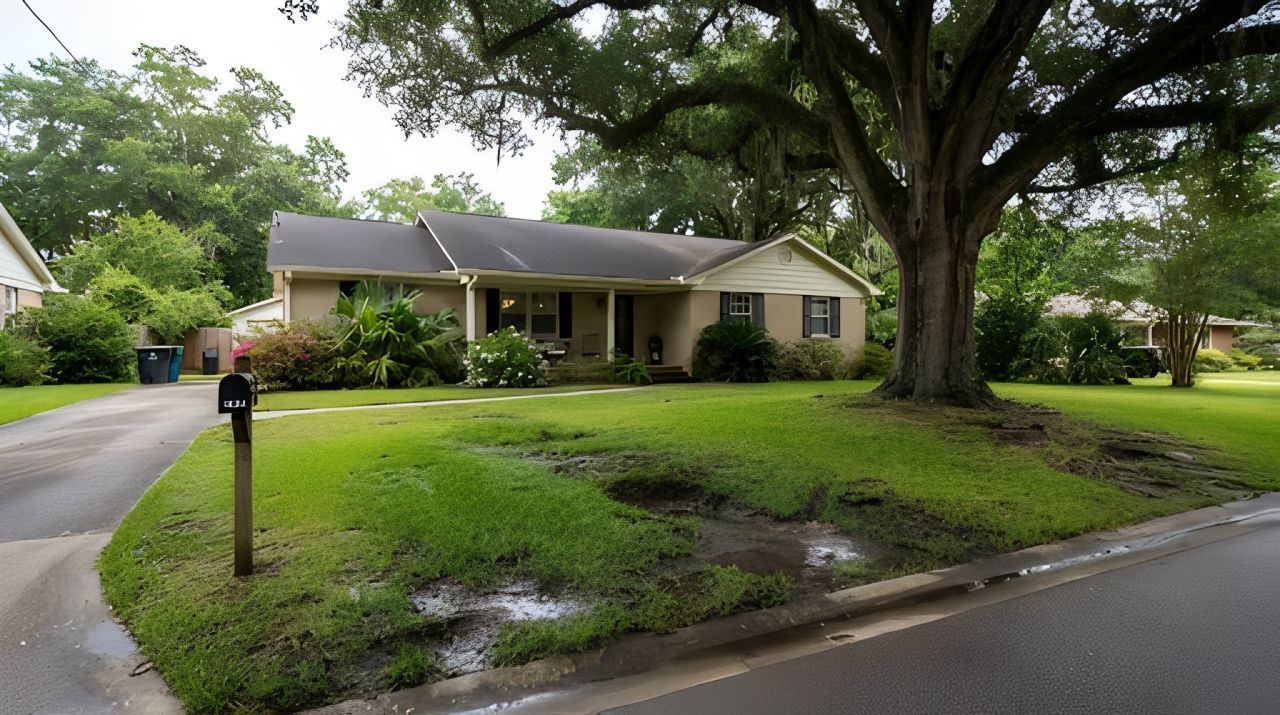
You wake up the morning after a heavy summer storm, walk out to grab the paper, and your shoes sink an inch into a patch of yard that has no business being that wet. Inside, the shower is draining slower than usual and the toilet gurgles faintly when it refills. Nothing dramatic has happened yet, but something has clearly changed. In a lot of Leon County neighborhoods, that combination points straight at the drain field, and at a water table that just rose enough to get in the way of what your septic system is trying to do.
This is one of the most common calls we get after a big rain event, and it catches people off guard because the system worked fine the week before. Understanding what is actually happening underground, why it is more common here than in most of the country, and what to do in the hours and days after a storm can be the difference between a system that recovers on its own and one that ends up backing up into the house.
What Happens to a Drain Field When the Water Table Rises
A conventional septic system does two jobs. The tank separates and breaks down solids, and the drain field takes the liquid that comes out of the tank and disperses it into the soil, where naturally occurring bacteria finish treating it before it rejoins the groundwater. That second step depends entirely on having several feet of soil that is not already saturated. The perforated pipes in the field are designed to release effluent into air pockets in the soil, letting it move slowly downward and outward.
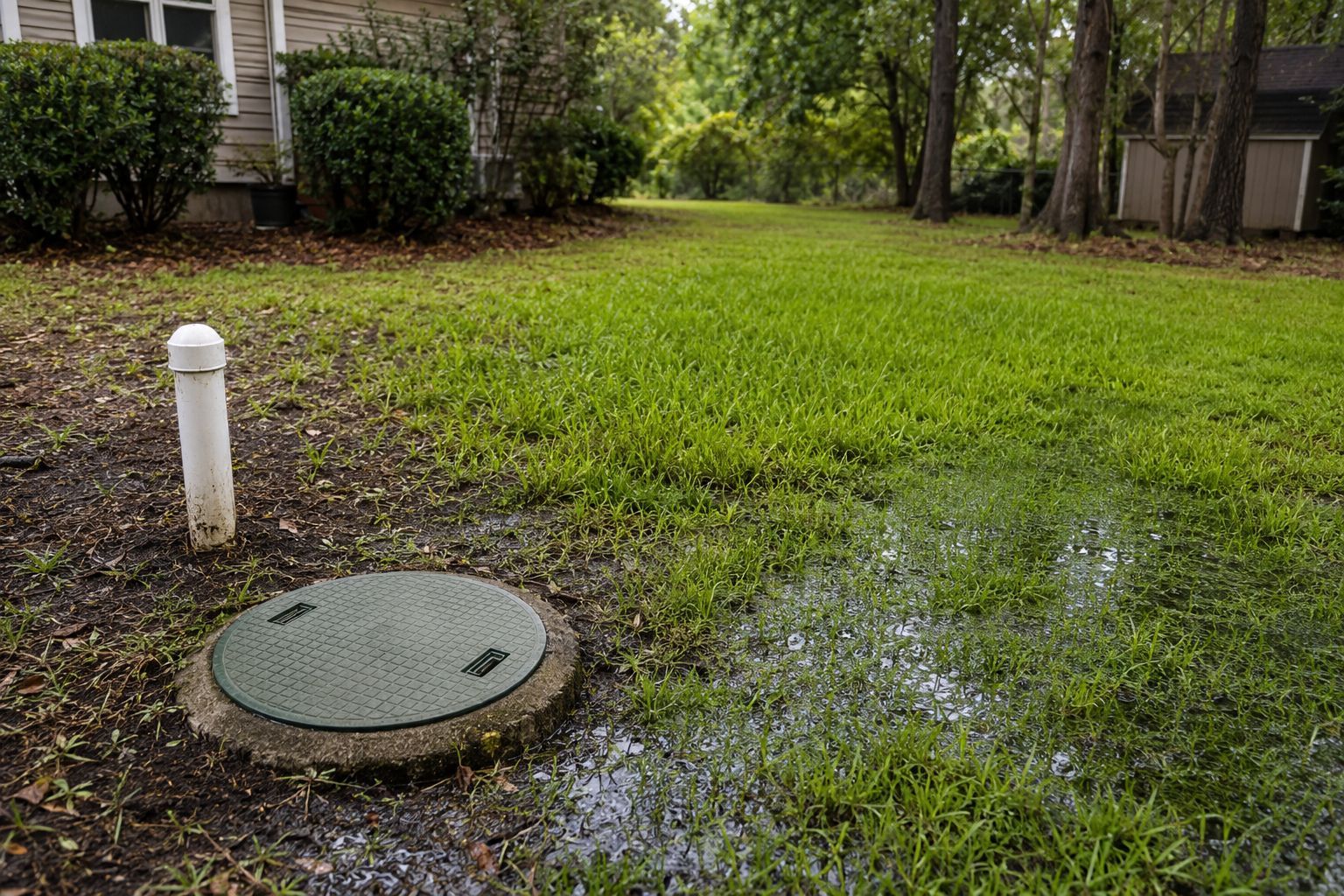
A high water table erases that dry zone. When groundwater rises close enough to the drain field, the soil around the pipes is already full of water, and there is nowhere for new effluent to go. Wastewater leaving your home has to slow down or stop, and in the worst cases it flows backward into the tank instead of forward into the ground. A tank that can no longer empty into a saturated field starts to act like a holding tank, and once it's full, the next thing that has to give is your plumbing.
And that explains why the timing lines up so closely with the rain. The ground doesn't need to flood. It only needs enough water sitting in the soil profile to close the gap between the drain field and the water table underneath it.
Signs Your Drain Field Is Overwhelmed by Rain
The signs of a saturated field look a lot like the everyday warning signs of septic trouble, but the timing gives it away.
Drains that slow down together, right after a storm
One sluggish sink is usually a local clog. Multiple drains slowing at once, on the heels of heavy rain, points to the field struggling to accept water rather than a blockage in a single line.
Gurgling toilets and drains
That bubbling sound is trapped air working its way through a system where wastewater is not moving freely downstream. It often shows up a step ahead of an actual backup.
Standing water or mushy ground over the field
A patch that stays wet, spongy, or visibly puddled well after the rest of the yard has dried out is one of the clearest signs the field itself is saturated rather than just soggy from surface rain.
A sewage smell that lingers outdoors
Effluent sitting closer to the surface than it should tends to announce itself. A sulfur or sewage odor near the tank or field after a storm, especially one that was not there before the rain, means the field is not absorbing the way it should.
Tip: After the next hard rain, give the ground a full day to drain before you judge anything. Then walk the area over your tank and drain field and note which spots are still wet, spongy, or smelly compared to the rest of the yard. A quick phone photo with the date attached builds a record over a few storms that shows us whether this is a one-time event or a pattern worth addressing.
Why Tallahassee's Ground Makes This a Bigger Deal
Plenty of places deal with occasional storm flooding, but Leon County stacks several factors that make water table issues a routine part of owning a septic system here rather than a once-a-decade surprise.
Roughly thirty thousand households in Leon County rely on a septic system rather than city sewer, and a large share of them sit in the lower-lying areas south of Tallahassee, where groundwater naturally runs closer to the surface than it does farther north. Add a humid subtropical climate that delivers intense afternoon downpours all summer, plus the occasional tropical system in late summer and fall, and the water table in these areas can rise several feet in a matter of days. Then it drops again just as fast.
The soil itself does not help matters. Much of the region sits on a mix of sandy and clay layers that drain unevenly. Sandy soil alone would let water pass through quickly, but interspersed clay slows that process, holding water in the profile longer after a storm than a uniformly sandy site would. That combination means a drain field that handles routine household use just fine can still get overwhelmed for a few days every time a serious rain event rolls through.
What Not to Do While the Ground Is Still Saturated
The instinct after noticing a soggy drain field is to call for a tank pump-out right away, but timing matters more than people expect.
Pumping too soon can backfire. Pumping a tank while the surrounding soil is still saturated can actually make things worse. An empty tank in waterlogged ground is lighter and more buoyant, and in the right conditions it can shift or float in its hole, straining or breaking the pipes connected to it. The better move, unless a professional advises otherwise after looking at your specific setup, is to hold off on pumping until the soil has had a chance to drain and firm back up.
Running heavy equipment, mowers included, or digging over a wet drain field is also worth avoiding for the same reason plus one more: saturated soil compacts easily under weight, and compacted soil holds even less air, which is exactly what the bacteria doing the treatment work in your field need to function.
Warning: If wastewater is backing up into a tub, shower, or floor drain, or if you see standing sewage pooling anywhere in the yard, treat it as an emergency rather than something to monitor. Keep children and pets away from the wet area, avoid any contact with the water, and stop running water inside the house so you are not adding to what the system already can't process. Have it looked at promptly rather than waiting to see if it clears on its own.
Easing the Strain While the Ground Dries Out
Once you know a storm has pushed the water table up, the goal for the next day or two is simply to send less water into a system that already has nowhere to put it.
Spacing out laundry loads instead of running several back to back, running the dishwasher only when full, and shortening showers all reduce the volume hitting the tank during the window when the field is least able to absorb it. If your gutters or a sump pump discharge anywhere near the drain field, redirecting that water elsewhere on the property keeps stormwater from adding to the saturation directly over the lines. Checking for a running toilet or a dripping fixture matters more than usual in this stretch too, since a leak you might normally ignore is one more source of water competing for the same overloaded soil.
None of this fixes an underlying problem on its own, but it buys the field time to recover naturally once the rain lets up and gives you a clearer read on whether the system settles back to normal or keeps struggling.
When It's More Than Just the Rain
An occasional slow day after an unusually intense storm is one thing. A drain field that floods, backs up, or smells after every meaningful rain event is telling you something different: the field itself may be undersized for the household, aging and less permeable than it used to be, or simply sited in ground that sits too close to the water table for a conventional design to handle reliably.
That is a different conversation than storm-proofing your habits for a few days. It usually starts with an inspection to see how the field is actually performing and how much separation exists between the pipes and the water table at different times of year, followed by a real look at whether the system needs repair, a redesigned field, or an alternative approach better suited to wet ground. Guessing at fixes on a field that keeps failing after rain almost always costs more time and frustration than getting an accurate read on it up front.
Why Tallahassee's Ground Makes This a Bigger Deal
Plenty of places deal with occasional storm flooding, but Leon County stacks several factors that make water table issues a routine part of owning a septic system here rather than a once-a-decade surprise.
Roughly thirty thousand households in Leon County rely on a septic system rather than city sewer, and a large share of them sit in the lower-lying areas south of Tallahassee, where groundwater naturally runs closer to the surface than it does farther north. Add a humid subtropical climate that delivers intense afternoon downpours all summer, plus the occasional tropical system in late summer and fall, and the water table in these areas can rise several feet in a matter of days. Then it drops again just as fast.
The soil itself does not help matters. Much of the region sits on a mix of sandy and clay layers that drain unevenly. Sandy soil alone would let water pass through quickly, but interspersed clay slows that process, holding water in the profile longer after a storm than a uniformly sandy site would. That combination means a drain field that handles routine household use just fine can still get overwhelmed for a few days every time a serious rain event rolls through.
Frequently Asked Questions
Why does my septic system only act up after it rains?
Heavy rain raises groundwater and saturates the soil around your drain field, leaving less room for wastewater to disperse. Once conditions dry, normal septic drainage often gradually returns again.
Is it safe to pump my septic tank right after a big storm?
Pumping immediately after heavy rain can be risky because saturated soil may cause an emptied tank to shift or float. Waiting until surrounding ground drains and firms up is generally safer.
How long does a saturated drain field take to recover?
Many saturated drain fields recover within several days after rainfall stops, depending on soil conditions and groundwater levels. Persistent slow drains, odors, or standing water may indicate a deeper problem.
Can I do anything to make my drain field handle rain better long-term?
Direct gutters and drainage away from the field, avoid driving or parking over it, and maintain routine tank pumping. Recurring problems may require professional evaluation for a more suitable system design.
Does a high water table mean I have a bad septic system?
Not necessarily. Properly designed septic systems can function reliably with higher groundwater levels. Problems arise when storms cause excessive saturation or an older, undersized drain field struggles to disperse wastewater properly.
Reading Your Yard Before Septic Trouble Grows
A soggy drain field and slow drains after a Tallahassee downpour do not always mean the septic system is failing. Often, they show that groundwater has temporarily risen high enough to limit how quickly wastewater can move through the soil. Reducing household water use, keeping additional runoff away from the field, and watching how conditions improve over the following days can help distinguish a temporary weather-related slowdown from a recurring drainage problem that deserves closer attention over the coming seasons.
With 21
years of experience serving Tallahassee, FL, Mike Seeders Plumbing Inc
understands how North Florida rainfall and high water tables can affect
septic performance. Paying attention to repeated wet spots, lingering odors, gurgling fixtures, and slow drains after storms provides valuable clues about how well a drain field is recovering. When these symptoms consistently disappear as the ground dries, the system may simply be responding to temporary saturation; when they persist, they can indicate deeper limitations within the field itself.