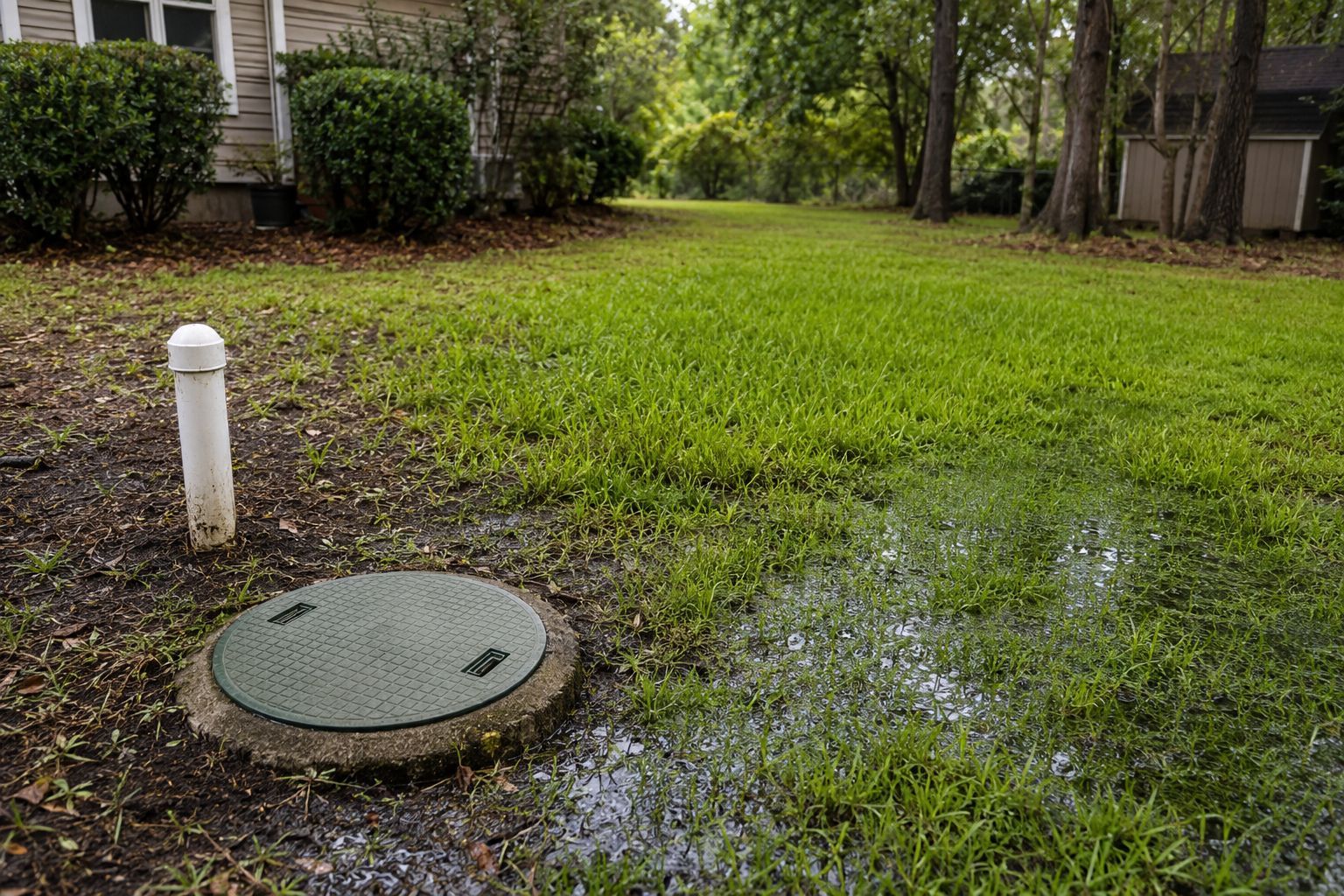
Gurgling Drains and Soggy Spots: Is a Live Oak Root Invading Your Sewer Line
How often should a septic tank be pumped in Florida?
The EPA recommends pumping every three to five years and inspecting at least every three years. A large household or slow drains signal the shorter end of that range. A professional can set a schedule fitting your tank and use.
What is the first sign of a failing septic system?
Usually it's drains slowing throughout the house at once, often with gurgling toilets. Those indoor clues typically appear before anything shows in the yard, giving you the best shot at a simple repair if caught early.
Why is the grass greener over my drain field?
Lush, fast-growing grass following drain field lines usually means extra moisture and nutrients are reaching the surface instead of absorbing underground. It's a common early sign worth checking before it becomes standing water.
Can heavy rain cause my septic system to back up?
Yes. Drain fields rely on unsaturated soil to absorb water. During storm season, saturated ground leaves nowhere for effluent to go, so a system running fine most of the year can back up during heavy rain.
Do tree roots really damage septic lines?
They can. Mature live oaks send roots toward steady moisture sources like septic lines, which can clog or crack over time, causing recurring backups. A camera inspection shows whether roots are the culprit.
How do I know if it is my septic tank or just a clogged drain?
A single slow fixture is usually local. Several drains slowing together, gurgling toilets, or outdoor odors and wet spots point toward the main line, tank, or drain field. An inspection reveals the real source.
Frequently Asked Questions
Quick Answer: Gurgling drains, slow flushes in more than one bathroom, and a soggy or unusually green patch in the yard often point to a tree root inside your sewer line, not a random clog. Live oaks send roots well past their canopy, and a hairline crack or a loose joint in an older pipe is all the opening a root needs. Once inside, a root feeds on the moisture and waste nutrients in the line and keeps growing, and North Florida's warm, humid climate means that growth rarely slows down for winter the way it would farther north. Roots don't create the first crack in a healthy pipe, but left alone they can turn a small one into a collapsed line within a few years. A camera run through the line is the only reliable way to confirm roots are the cause and see how far they've traveled.
Your bathroom sink gurgles for a second every time the washing machine drains, and it's been happening more since the weather turned warm and wet. Out past the patio, there's a patch of grass near the old live oak that never quite dries out, even on days without a drop of rain. Neither of those things looks like an emergency by itself. Put them together, though, and you're looking at one of the more common underground problems we run into across Leon County: a sewer line with a root growing through it.
We've walked this exact scene more times than we can count. A homeowner mentions the gurgle almost as an afterthought, then points out the soggy spot like it's unrelated. It usually isn't. Tallahassee and the surrounding Big Bend are full of mature live oaks, the trees that shade the canopy roads and every established neighborhood in between, and those same trees are quietly one of the biggest threats to the pipe running from your house to the street or your septic tank.
Why a Live Oak Goes Looking for Your Pipes
A tree root doesn't punch a hole through solid pipe. It can't. But it doesn't need to. What it does instead is find a weakness that already exists, usually a joint where two sections meet, a hairline crack from ground settling, or a seam that was never sealed quite right to begin with, and it works its way in.
A crack that's barely there still leaks enough to matter. Even a gap too small to see with the naked eye lets out a steady trace of water vapor and waste nutrients into the surrounding soil. To a root system searching for moisture, that's a beacon. Once a fine root tip finds the opening, it slips inside and starts absorbing everything a sewer pipe has to offer.
Live oak roots travel much farther than most people assume. According to the University of Florida's IFAS Extension, a mature southern live oak can spread 60 to 120 feet across. Its root system reaches out even farther once the soil around it is confined by driveways, sidewalks, or a house foundation. A tree standing forty or fifty feet from your home isn't out of range. Its roots are likely already running somewhere near, or directly through, the path your sewer line takes to the street.
Warm, wet ground means roots barely take a break. Unlike a maple or an oak up north that goes dormant for a real winter, live oaks and the roots underneath them stay active through most of a North Florida year. Add in our humid, subtropical climate and a growing season that barely pauses, and a root that finds a crack in July can still be thickening it in December.
Once a root gets established inside a pipe, it doesn't stay thin for long. It grows in diameter the same way the rest of the tree does, and as it thickens, it widens whatever opening let it in. What starts as a hair-fine root can, over a couple of years, become a mass that catches toilet paper, grease, and wipes on its way past, and that's when a small leak turns into a real blockage.
The Signs That Point Underground
Root intrusion rarely shows up as one dramatic event. It builds slowly, and most of the signs are easy to write off individually. Seen together, they tell a different story.
Gurgling that shows up in the wrong place. If your bathroom sink or tub makes a gurgling sound when you flush a toilet elsewhere in the house, or when the dishwasher or washing machine drains, air is getting trapped somewhere it shouldn't. That's usually the main line, not the fixture making the noise.
More than one drain running slow at the same time. A single sluggish sink is often just that sink. When the shower, the kitchen sink, and a toilet all start draining slower in the same week, the shared line they all feed into is the more likely culprit.
A clog that keeps coming back. Plunging or a bottle of drain cleaner clears things up for a few days, then the same drain backs up again. Roots inside a pipe act like a screen, catching debris no matter how many times you clear the surface blockage in front of them.
A soggy, sunken, or too-green patch of yard. Wastewater leaking from a damaged section of pipe fertilizes the soil right above it. If one stretch of your lawn stays wetter or greener than everywhere around it, especially along the path between your house and the street or septic tank, that's worth a closer look.
Backups tied to heavy water use. A backup that shows up specifically when the washer drains during a shower, or after several loads of laundry in one day, points to a line that's already narrowed and can't handle the added volume.
Tip: Keep a rough log of which fixtures act up and when. A pattern across multiple drains, especially ones on opposite ends of the house, is one of the clearest signs that the problem sits in the main line rather than in any single fixture.
Storm Season Turns a Small Problem Into a Loud One
A root-narrowed pipe can limp along for months without causing an obvious backup, right up until a big rain event pushes more water through the system than the line has room for.
Leon County already sits on a high water table in a lot of neighborhoods, and our sandy-clay soil doesn't drain the way sand alone would. During hurricane season, from June through November, heavy rainfall saturates the ground around an aging sewer line fast. Water finds its way into the pipe through the same cracks and loose joints the roots used to get in, and the added volume has to go somewhere. If a root mass has already narrowed the inside of the pipe, that extra water backs up toward your house instead of flowing on toward the street.
That's why so many root-related backups seem to appear out of nowhere right after a summer storm. The root has probably been there for a while. And the storm just supplied the water that finally exposed how little room was left inside the pipe.
If Your Home Runs on a Septic System
A lot of homes across our service area run on septic rather than a public sewer connection. That's especially true out toward Crawfordville, Woodville, and the more rural stretches of Leon and the surrounding counties. Root intrusion still applies, but the vulnerable stretch is different.
On a septic system, the pipe most at risk from roots is the shorter run between your house and the tank inlet, not the drain field itself. A root that gets into that section can slow or block wastewater before it ever reaches the tank. That shows up as the same gurgling and slow-drain symptoms described above, even though the tank and drain field are working just fine. It's a narrower, more localized problem than drain field saturation, and it calls for a camera run on that specific stretch of pipe rather than a septic inspection.
What a Look Inside the Line Actually Shows
Guessing at what's under your yard almost always costs more in the long run than finding out for certain. A sewer camera, fed directly into the line, changes the conversation from guesswork to evidence.
It shows exactly where the root got in. Rather than assuming the whole line is compromised, a camera pinpoints the depth and location of the intrusion, so any repair targets the actual problem instead of the whole run of pipe.
Cutting the root clears the drain for now, not for good. Mechanically cutting through a root mass restores flow the same day, which matters when a backup is already happening. But cutting doesn't seal the crack the root came through, and roots commonly grow back through the same opening within a year or two if nothing else changes.
Sealing the entry point is what actually stops the cycle. Depending on how much of the pipe has been affected, options range from thorough jetting and targeted spot repair to lining the damaged section from the inside, which closes off the gaps roots use without tearing up the yard between your house and the street. How much of the line needs attention, and which approach makes sense, comes down to what the camera actually finds.
Warning: Recurring clogs that clear and return within days almost never resolve on their own, and repeated use of over-the-counter chemical root killers won't repair a cracked or open pipe joint underneath the roots. Ignoring the pattern usually means the eventual repair is bigger, not smaller.
A Root Problem Rarely Waits for a Convenient Time
Most of the sewer calls we get that trace back to roots didn't start as emergencies. They started as a gurgle someone learned to ignore, or a soft spot in the yard that got mowed around for a season or two. By the time a full backup happens, usually during a holiday, a house full of guests, or the middle of a storm, the root has had months or years to work.
Catching the signs early, and getting a camera into the line before things get to that point, is almost always the easier path. The pipe running under your yard doesn't care whether the timing is convenient. Your live oak won't ask permission before it goes looking for the nearest source of water.
Why Tallahassee's Ground Makes This a Bigger Deal
Plenty of places deal with occasional storm flooding, but Leon County stacks several factors that make water table issues a routine part of owning a septic system here rather than a once-a-decade surprise.
Roughly thirty thousand households in Leon County rely on a septic system rather than city sewer, and a large share of them sit in the lower-lying areas south of Tallahassee, where groundwater naturally runs closer to the surface than it does farther north. Add a humid subtropical climate that delivers intense afternoon downpours all summer, plus the occasional tropical system in late summer and fall, and the water table in these areas can rise several feet in a matter of days. Then it drops again just as fast.
The soil itself does not help matters. Much of the region sits on a mix of sandy and clay layers that drain unevenly. Sandy soil alone would let water pass through quickly, but interspersed clay slows that process, holding water in the profile longer after a storm than a uniformly sandy site would. That combination means a drain field that handles routine household use just fine can still get overwhelmed for a few days every time a serious rain event rolls through.
Frequently Asked Questions
How can I tell if slow drains are from tree roots and not just an old clog?
A single slow drain is often local. Roots almost always affect more than one drain at once, since they're blocking the shared line. A camera inspection confirms it.
Which trees around Tallahassee cause the most sewer line problems?
Live oaks are the most common offender since they're everywhere and their roots spread wide. Water oaks, laurel oaks, and sweetgums are aggressive growers too, especially near older pipe.
Will cutting down the tree fix the problem?
Not by itself. Roots already inside the pipe don't disappear when the tree comes down. Removing the tree may stop new growth, but the pipe still needs repair at the entry point.
Can chemical root killers get rid of roots for good?
They can slow regrowth as a stopgap, but they don't repair the crack or open joint roots used to get inside. Without addressing that opening, roots typically find their way back.
How often should I have my line inspected if a mature oak grows nearby?
Every couple of years is a reasonable baseline. Homes with a large tree nearby, or older clay or cast iron pipe, should check more often to catch growth early.
Does a root problem always mean the whole sewer line needs replacing?
No. Most root intrusion affects one section of pipe, usually at a joint or crack. A camera inspection shows how much of the line is involved before any repair begins.
Catching Roots Before They Take Over
Gurgling drains and a soggy patch of yard rarely mean nothing, especially near a mature live oak. Roots don't create the original crack in a pipe, but once inside, North Florida's warm, humid climate keeps them growing year-round instead of slowing for winter. Mike Seeders Plumbing Inc has spent 21 years reading sewer lines under Tallahassee and Leon County yards, and the pattern is almost always the same: small signs ignored for months until a storm finally exposes how little room is left inside the pipe.
A camera inspection turns guesswork into a clear answer, showing exactly where a root got in and how much of the line it's affected. Cutting through a root clears the immediate blockage, but sealing the entry point is what actually stops it from coming back. Catching that pattern early, before a holiday backup or a flooded yard forces the issue, is almost always the easier and less costly path forward.
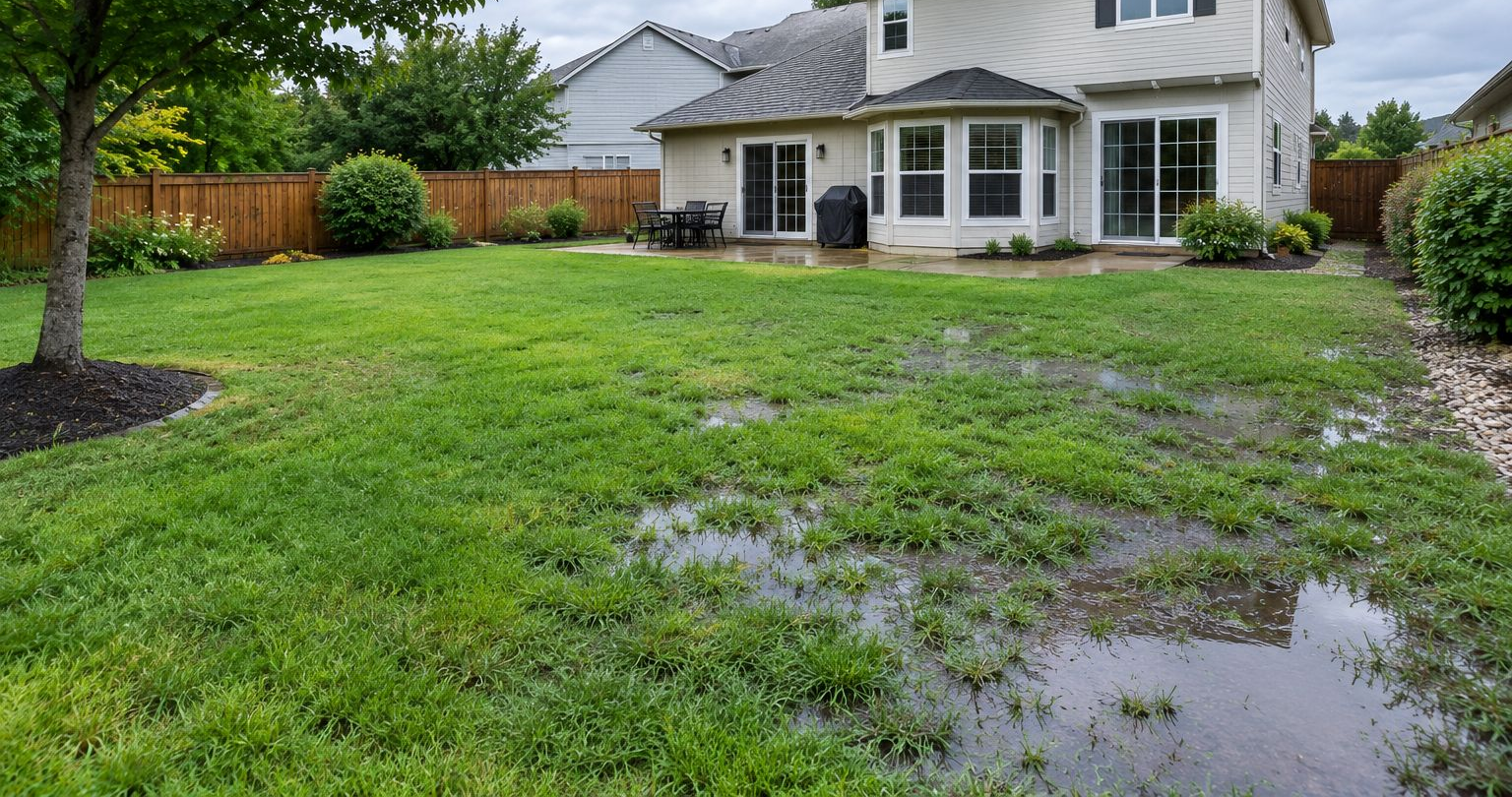
Soggy Yard and Slow Drains After a Tallahassee Downpour? What a High Water Table Does to Your Septic